 Fraunhofer Institute for Integrated Circuits IIS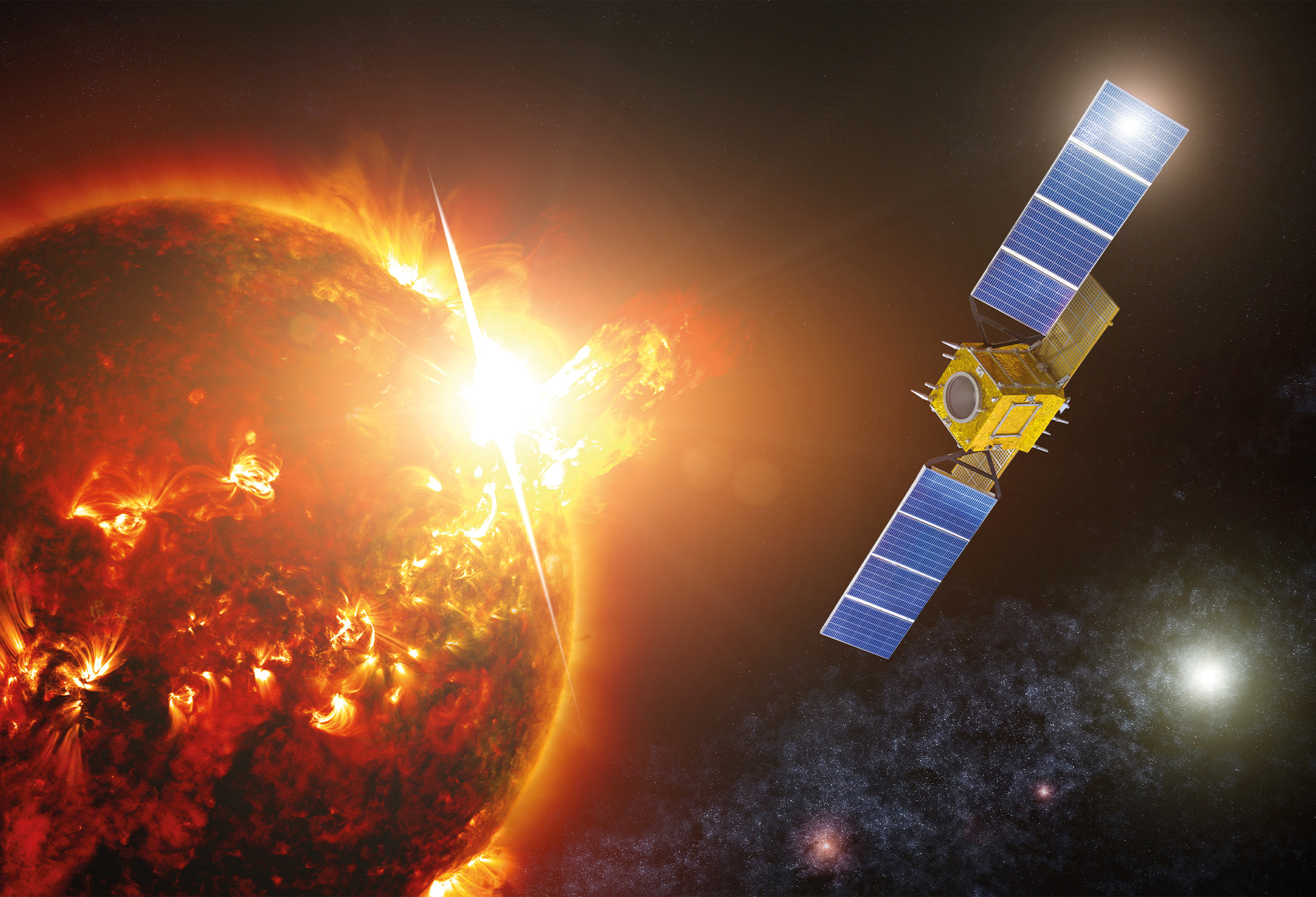
Space radiation is considered one of the greatest challenges for modern satellite missions. This is primarily due to our sun: it releases high-energy elementary particles through sunspots and coronal mass ejections that continuously impact satellites in Earth orbit, gradually weakening their electronic hardware and potentially causing unpredictable system failures. Therefore, protecting the spacecraft is of utmost priority. To minimize risks, developers currently rely on radiation-hardened components. However, these are specialized products that drive up the cost of satellites and limit design flexibility.
An open research question is whether regular hardware could still withstand space radiation. This could significantly reduce the costs of a satellite mission without jeopardizing its success. However, access to radiation data and a comprehensive understanding of space weather are essential.
We aim to fill this gap as part of the "EBKAS" project: we measure real-time radiation exposure in geostationary orbit and analyze the effects on the electronic components of a satellite. For this purpose, we use our Fraunhofer On-Board Processor (FOBP) – a reconfigurable payload aboard the Heinrich Hertz satellite, in which cost-effective standard memory modules are installed as radiation sensors.