 Fraunhofer Institute for Integrated Circuits IIS
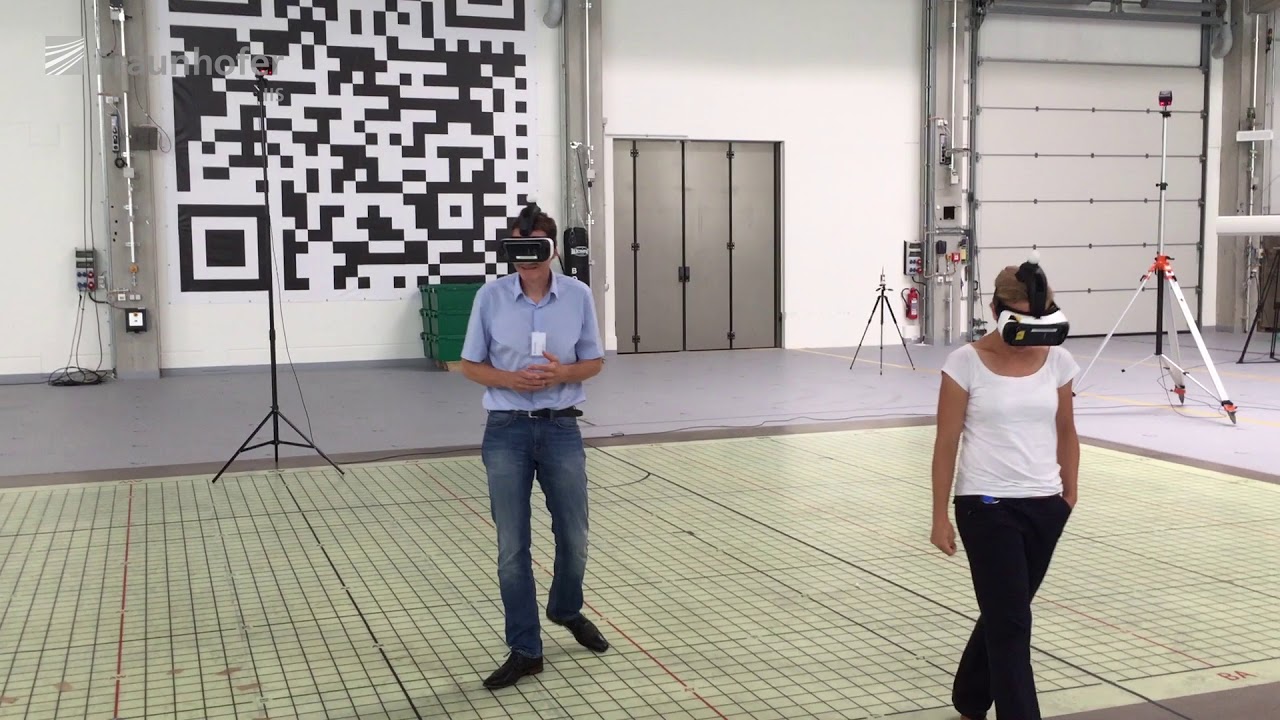
Michael Husarek is editor in chief of Nürnberger Nachrichten. In the context of digital change, he deals extensively with the changing role played by regional daily newspapers and the products they offer. Between March and May 2017, Nürnberger Nachrichten were part of the theme world “MitMachMedien” in the JOSEPHS open innovation laboratory in downtown Nuremberg. Michael Husarek also paid a visit to the Fraunhofer IIS’s Holodeck 4.0 in Nuremberg on August 4. We asked the journalist to share his impressions with us and to tell us which findings he would be taking on board for his work.

Mr. Husarek, as editor in chief of Nürnberger Nachrichten, you are extensively involved in priming your product – the regional daily newspaper – for the future. On which questions and challenges do you focus most?
The greatest challenge is certainly the change brought about by digital transformation. This calls into question our business model – one that has thrived for decades. This is for many reasons: For a start, reading habits have changed. Whereas people used to wait until the daily newspaper came out, they can now call up the latest news via smartphone (virtually) around the clock.
Another reason is because people have become accustomed to having their say. We journalists used to have an unchallenged gatekeeper function – we would examine the news items and select the most relevant of these. Today, social media allows everyone to choose their own news stories and to comment on them.
Ultimately, the free culture ushered in by the internet over the years is a real problem for us.
Establishing a paying model for quality regional journalism on the market is quite a challenge. This means that we are in the midst of a change which I for one see as a great opportunity – this is because I firmly believe that there will still be a demand for quality journalism.
You also spent three months at JOSEPHS, the Center for Applied Research on Supply Chain Services SCS's open innovation laboratory in downtown Nuremberg, with a view to determining the path that your medium will have to take in order to remain viable in the future. What prompted you to make this move?
I have visited JOSEPHS regularly since it opened and have always been impressed by the mood of innovation that prevails there. In my experience, innovation also has something to do with one’s surroundings: members of the public were eager to engage my NN editorial colleagues and myself in discussions about our future – this happened at a dozen events that we organized there on a weekly basis.
At JOSEPHS, a wide cross section of people are directly involved in innovating companies’ services and products. How did you find JOSEPHS? And what did you want to find out from the people who visited it?
I saw JOSEPHS as an opportunity to bathe in a fountain of youth. Not for me personally (although being 50, I would certainly be tempted), but with regard to the products we offer. Many products that we were completely sold on were called into question there. This was because they clearly did not meet the needs of many JOSEPHS visitors. What we wanted to know most of all from the visitors to JOSEPHS was which media they used and how and when they used them.
Many JOSEPHS visitors were very much aware of the filter bubble problem
What were your most interesting experiences and which ones surprised you the most?
I found it very interesting that many JOSEPHS visitors were very much aware of the filter bubble problem. Among the things we tested there was a personalized app that would select news items based on the user’s needs. Testers frequently indicated that they were afraid of becoming isolated even further in their own filter bubble and that – in spite of all possible settings – they would receive information that was filtered and selected according to our journalistic rules. I interpret this as follows: It must be possible to make a selection but only on the basis of guaranteed basic information. This is exciting and influences how new products are developed.
So what is the next step? How do you plan to further process the findings of the past three months in which your media offerings were tested in the open innovation laboratory and, above all, were put through their paces by other people? Are there already concrete plans or measures that have been derived from this?
We have already completed our analysis of the JOSEPHS findings. We now need to develop new products that meet as many as possible of the criteria mentioned by the JOSEPHS visitors. In concrete terms, this means keeping a very close eye on our price-performance ratio when it comes to paid digital products. This is also something that we took on board. People are willing to pay for their news, but with clear limitations.