 Fraunhofer Institute for Integrated Circuits IIS
Fraunhofer IIS is conducting research to detect Citrus Greening Disease in citrus plants at an early stage to prevent its spread: To this end, the Development Center for X-ray Technology division employs cutting-edge 3D scanning technologies for plant phenotyping.
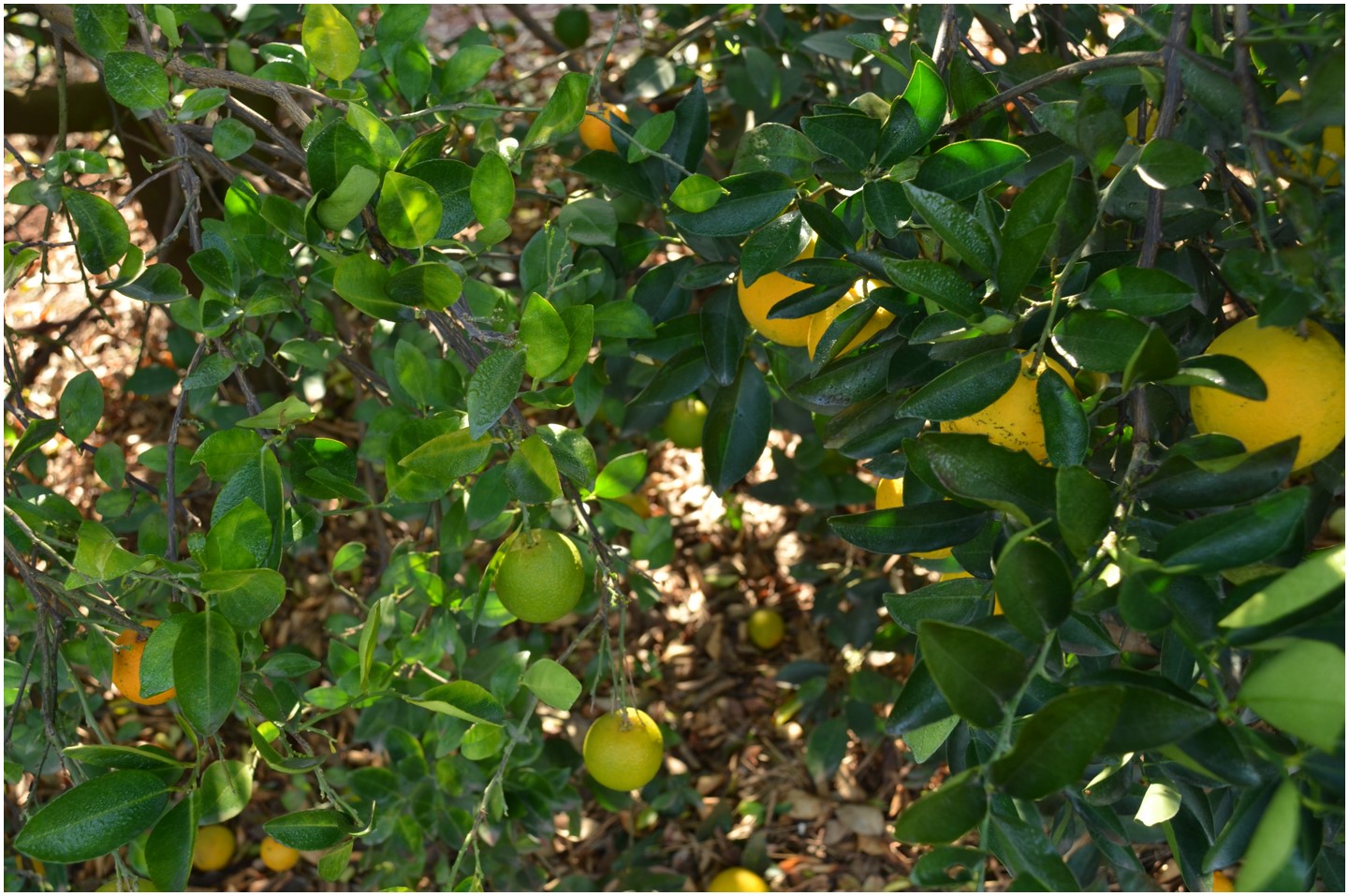
Citrus trees worldwide affected by bacterial infection
© Fraunhofer IIS
3D scanning in citrus cultivation to combat Citrus Greening Disease
August 25, 2025
Oranges, clementines, lemons, grapefruits, limes – citrus fruits play an indispensable role in our kitchens and diets. Yet the plants behind them face a stealthy adversary: The Citrus Greening Disease. The incurable bacterial infection, commonly referred to in technical jargon as Huanglongbing (HLB), was first identified in China and poses a serious threat to global citrus production. While HLB has not yet been detected in the EU, the insects that transmit the disease from tree to tree have already been found in Portugal, Spain, and Cyprus.
All commercially cultivated citrus plants are susceptible to HLB, which leads to premature fruit drop and significant yield losses. The progression from initial infection to plant death can span up to five years. Throughout this timeframe, further plants may become infected, underscoring the importance of early detection. Some wild citrus relatives show resistance to HLB and may hold the key to breeding resilient varieties in the future. In addition to analyzing resistant plants, detailed phenotyping of infected citrus plants is essential for understanding their responses and curbing the disease’s spread.
3D phenotyping to combat HLB disease
Privacy warning
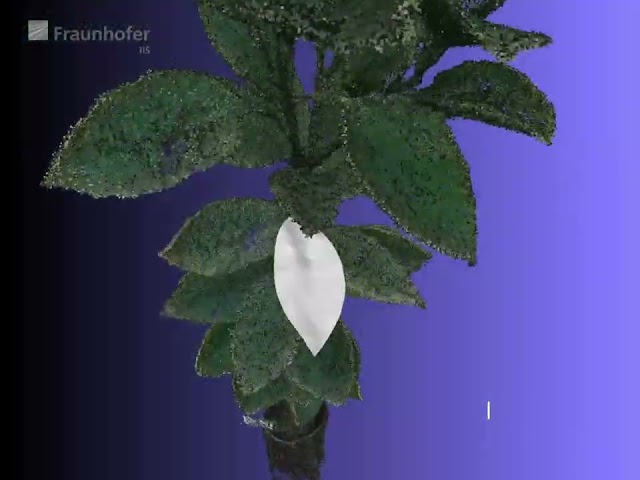
With the click on the play button an external video from www.youtube.com is loaded and started. Your data is possible transferred and stored to third party. Do not start the video if you disagree. Find more about the youtube privacy statement under the following link: https://policies.google.com/privacyThe video provides an insight into a 3D scanning process at the Development Center for X-ray Technology division: the Geometric Leaf Model
Non-destructive plant analysis – at Fraunhofer IIS and in collaboration with partners around the world
HLB currently poses a significant problem, particularly in Asia and South America. In Brazil, for example, nearly one-third of small-scale citrus farmers have gone bankrupt due to the disease. To address this, Fraunhofer IIS is collaborating with the research institution Fundecitrus in Brazil. The goal is to equip them with technologies such as phenotyping systems to detect infections in citrus plants at early stages, based on parameters like leaf color, shape, growth, or yield. This enables early identification and removal of infected plants, helping to slow the spread of the disease.
At the Fraunhofer IIS phenotyping facility in Merkendorf, only healthy young plants are examined. The more than 1,000 m² hall houses three controlled environments that can simulate various climate conditions, including CO₂ levels. Complementary 3D data acquisition systems – including X-ray CT and optical scanners – enable analysis of both above- and below-ground plant structures. This allows researchers to track issues such as root development disturbances. The resulting plant traits, or phenotypes, are visualized as high-resolution color point clouds.
Early detection of plant responses to HLB is vital for EU early warning systems and breeding programs aimed at identifying resistant genotypes. Traditional assessment methods are manual and time-consuming. The integration of 3D color imaging and X-ray CT technologies enables rapid and non-destructive phenotyping across diverse citrus populations. This paves the way for an early warning system to contain HLB in the EU, ensuring citrus plantations remain productive and citrus fruits continue to be available in consistent quality and quantity.
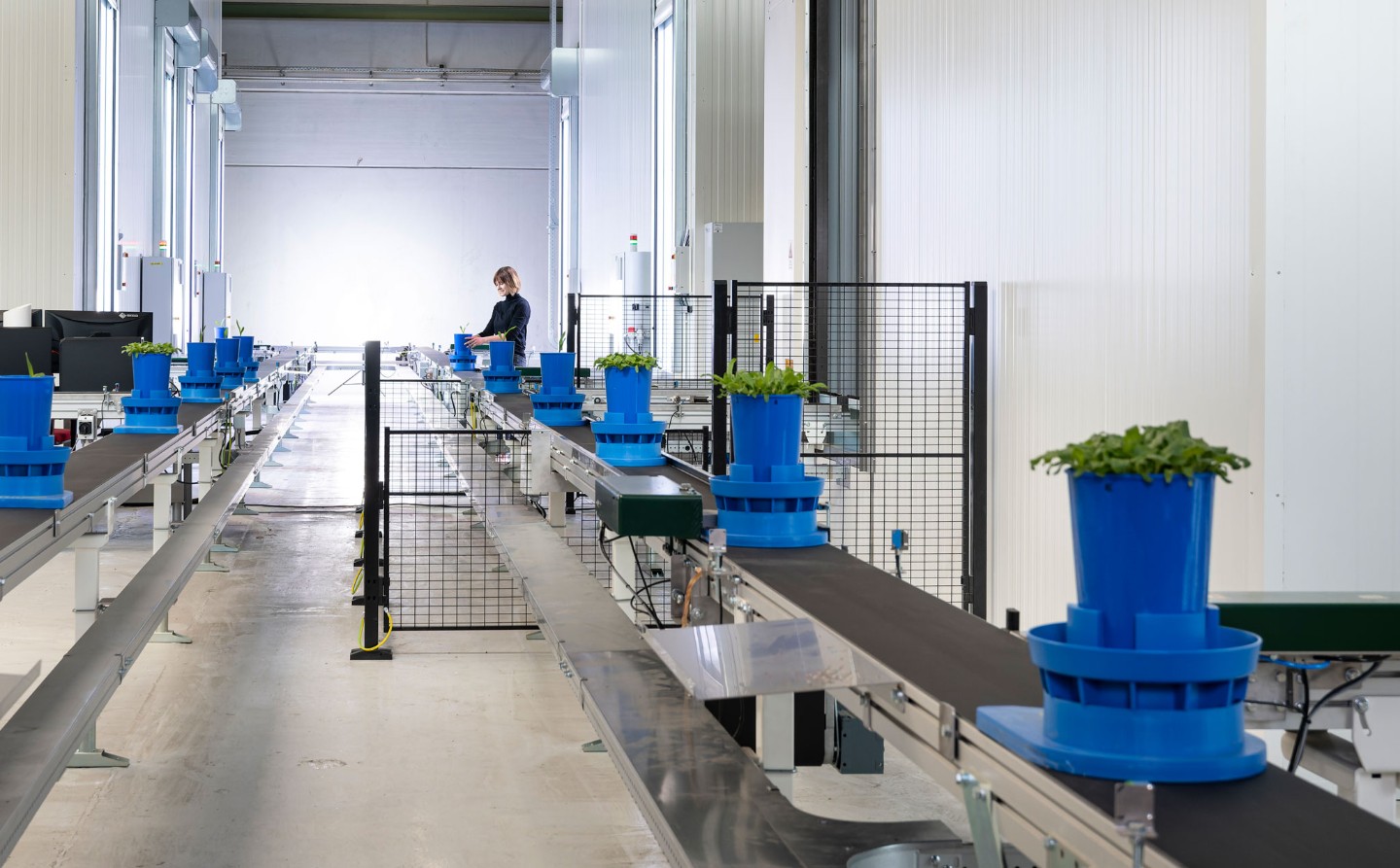
The Fraunhofer IIS facility is equipped with state-of-the-art X-ray and optical sensor systems. This enables researchers to non-destructively observe the internal structures of plant pots and document the development of root systems.
Smart Farming through phenotyping
The phenotyping facilities at Fraunhofer IIS offer a wide range of technologies to adapt to any measurement scenario across various plant genera – from stereoscopy and Laser sheet-of-light measurements to computed tomography. This extensive suite of sensor technologies opens countless possibilities for measurements involving different organisms, diseases, and environmental conditions. The result is precise, technology-driven agriculture – known as Smart Farming.